Attending, Exhibiting, or Hosting: 3 Ways to Build an Event Marketing Strategy
Every marketing budget has an events line item, and every year someone asks whether it's earning its keep. The honest answer depends entirely on which kind of event marketing strategy you're running, because "doing events" can mean three very different commitments, with three very different costs and three very different payoffs.
Most companies default to whichever one they tried first, rather than choosing on purpose. That's worth fixing. In-person events remain one of the strongest channels B2B marketers have: in Content Marketing Institute and MarketingProfs' most recent benchmark survey of 980 B2B marketers, 52% named in-person events their most effective distribution channel, tied with webinars and ahead of email, organic social, and company blogs, according to Content Marketing Institute.
Which of the three approaches fits, attending, exhibiting, or hosting, depends on what you're trying to accomplish.
Just Attending: Low-Commitment Market Intelligence
The simplest way to put events into your strategy costs the least and asks the least of your team: show up. Attending a trade show or industry conference means no booth, no branded signage, and no logistics team, just you (or a few people from your team) walking the floor, sitting in sessions, and having real conversations.
What you get. Direct access to the same room your prospects, competitors, and partners are already in. You hear what buyers are asking about, see what competitors are pitching, and build relationships with the people who matter, without owning a single deliverable.
What you don't get. Any visibility to the broader event audience beyond the people you personally talk to. There's no lead-capture system, no brand presence on the show floor, and no built-in way to measure ROI beyond the conversations you remember having.
Who this fits. Smaller teams testing whether a specific show or market is worth a bigger investment, companies doing account-based outreach where a handful of target-account meetings matter more than broad visibility, and anyone building the case for a bigger commitment next year.
How to prepare. Bring enough to hand off, not enough to pitch: a stack of business cards and a few printed flyers or one-pagers cover you if a conversation turns into real interest, and a website that's ready for the traffic matters just as much, since anyone who looks you up that night should find a site that backs up what you told them in person. Go in planning to meet people, not to sell to them. Most trade shows explicitly prohibit "suitcasing," attending as a non-exhibitor and working the floor to solicit business anyway, whether that's handing out materials unprompted, pitching staff inside other companies' booths, or scheduling sales meetings in the aisles, and it's grounds for getting removed from the show, according to Exhibit City News. Let your materials do the talking only when someone asks. If your business cards, flyers, or website need a refresh before the next show, that's exactly what Blue Halo's graphic design and copywriting teams handle.
Are Trade Shows Worth Attending?
For B2B companies, usually yes, with a caveat. Trade show attendance earns its cost when there's a specific reason to be in the room: named accounts you're trying to meet, a market you're evaluating, or competitive intelligence you can't get any other way. Attending without a specific goal is the version that doesn't pay off.
Exhibiting: Put Your Brand on the Show Floor
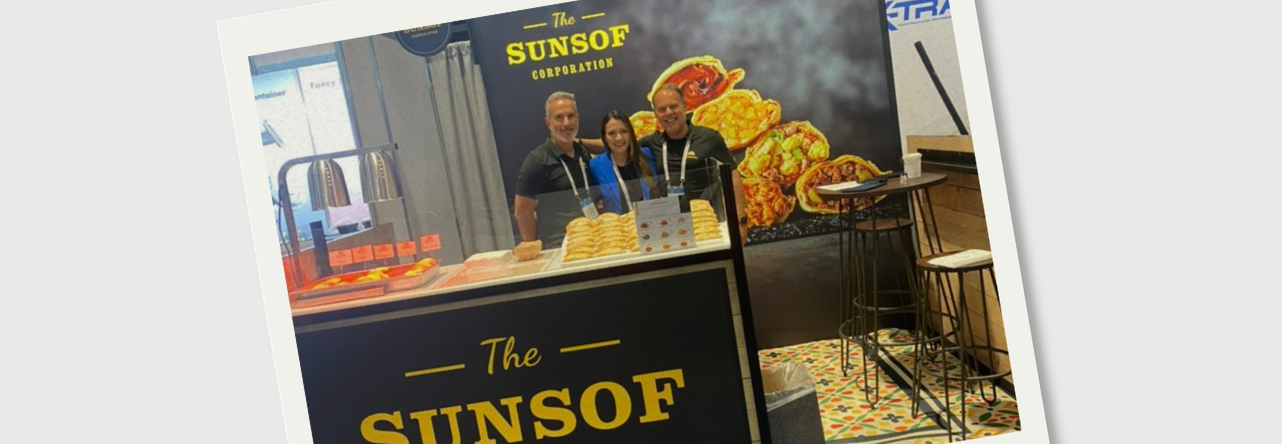
Exhibiting is attending with a stake in the ground. You still walk the floor and have the same conversations, but now you also have a booth, staff working it, and a lead-capture system running the whole time, so your booth is visible to everyone who walks the floor, whether or not they're on your list.
It's also where B2B marketing budgets concentrate most. In CEIR's most recent survey of 362 B2B exhibitors, face-to-face exhibitions took the largest single share of marketing budget across every budget size, at 41%, according to CEIR's Marketing Spend Decision Report.
What you get. Brand visibility to the entire show audience, a structured way to capture and qualify leads on the spot, and the credibility that comes from being a recognized name at a respected industry event.
What it costs. Booth space, design, shipping, and staff time add up fast, and none of it pays off without a follow-up plan built before the show opens. Exhibiting at trade shows without a lead-routing plan already in place is the most common way that spend disappears. Handing off the print graphics, booth logistics, and floor plan to Blue Halo's event management team is one way to keep that list from falling entirely on your own staff.
Who this fits. Companies with a physical or technical product that benefits from a live demo, teams building or maintaining a distributor and rep network, and anyone with the staff and follow-up process to work the leads a booth generates.
Hosting: Own the Room
Hosting is the highest-commitment option and the only one where you control the entire experience: the agenda, the guest list, the room, and the story your brand tells the whole time people are in it. That can mean a full-scale conference, a smaller client appreciation event, or a cocktail hour for a dozen key accounts.
Hosting isn't only in-person anymore, either. Virtual and hybrid formats have made "own the room" possible without a venue at all. The virtual events market is projected to grow at an 18.4% compound annual rate from 2026 to 2033, expanding from roughly $145.0 billion to $472.9 billion over that period, according to Grand View Research. That growth makes virtual and hybrid formats a lower-cost way to test whether hosting business events works for your audience before committing to a physical venue.
What you get. Full control over who's in the room and what they hear, the deepest relationship-building of the three approaches, and a platform for positioning your team as the expert in the room instead of a name on someone else's badge.
What it costs. Everything is on you. The agenda, the venue, the promotion, and the reason people should show up all fall to your team, since there's no existing event drawing the crowd for you. That's usually where outside help comes in, planning, coordinating, and running the marketing campaign around an event your internal team doesn't have the bandwidth to run from scratch.
Who this fits. Companies with an existing client base worth deepening, teams with genuine expertise to share, and anyone ready to invest the lead time, usually three to six months, that a well-run event needs.
Blue Halo's work with AMMEGA Group is one example at this level: full support for the 2025 Belting Technology Conference, including app and website development, vendor coordination, floor plan layout, print graphics, and day-of management.
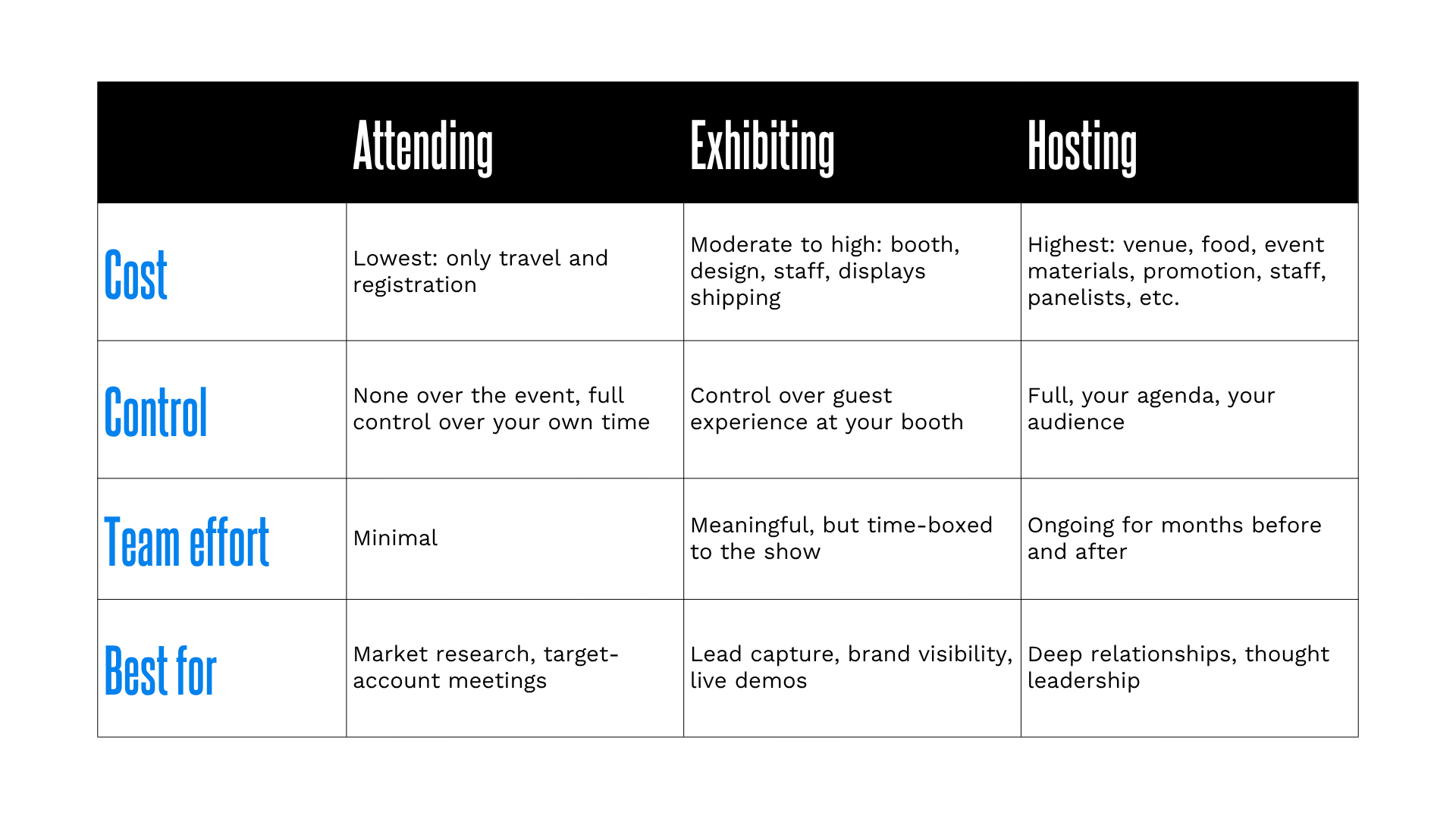
Which Approach Fits Your Company?
The right event marketing strategy matches the approach to the goal in front of you, event by event.
You Don't Have to Pick Just One
Most companies that get the most from events use more than one of these approaches at different points in the year: attending to test a new market, exhibiting at the shows where their buyers already gather, and hosting the handful of events where owning the room matters. Make that call fresh for each event, against a specific goal.
If you're mapping out where events fit in your own event marketing strategy, or you already know which of the three you need help executing, Blue Halo's event management services cover all three: staffing a booth, producing a hosted event from the ground up, or building the follow-up system that makes attending pay off. Blue Halo is based in Miami and works with clients on events there and across the country. Looking for event management in Miami specifically, or need a team that travels to wherever your event is happening? Reach out to Blue Halo and let's talk through which approach fits.